Overview
Most overage fees aren't surprises — they're the predictable result of loading mistakes that are easy to avoid. The two things that drive overage costs are going over the included weight and needing extra days because the container filled up faster than expected.
Neither of those has to happen. Here's how to load smart.
Heavy on the bottom, light on top
The most important rule: dense, heavy material goes in first and sits on the floor of the container. Concrete, brick, tile, plaster, and dense debris on the bottom. Light, bulky material — insulation, cardboard, foam, brush — goes on top.
This keeps the load's center of gravity low for transport, distributes weight across the floor evenly, and lets you pack the lighter material into remaining space without compacting it under something heavy.
Break down everything you can
Air is the enemy of an efficient dumpster load. A whole door takes up as much space as several flat sections of drywall. A whole cabinet frame takes up four times the space of the same frame broken apart.
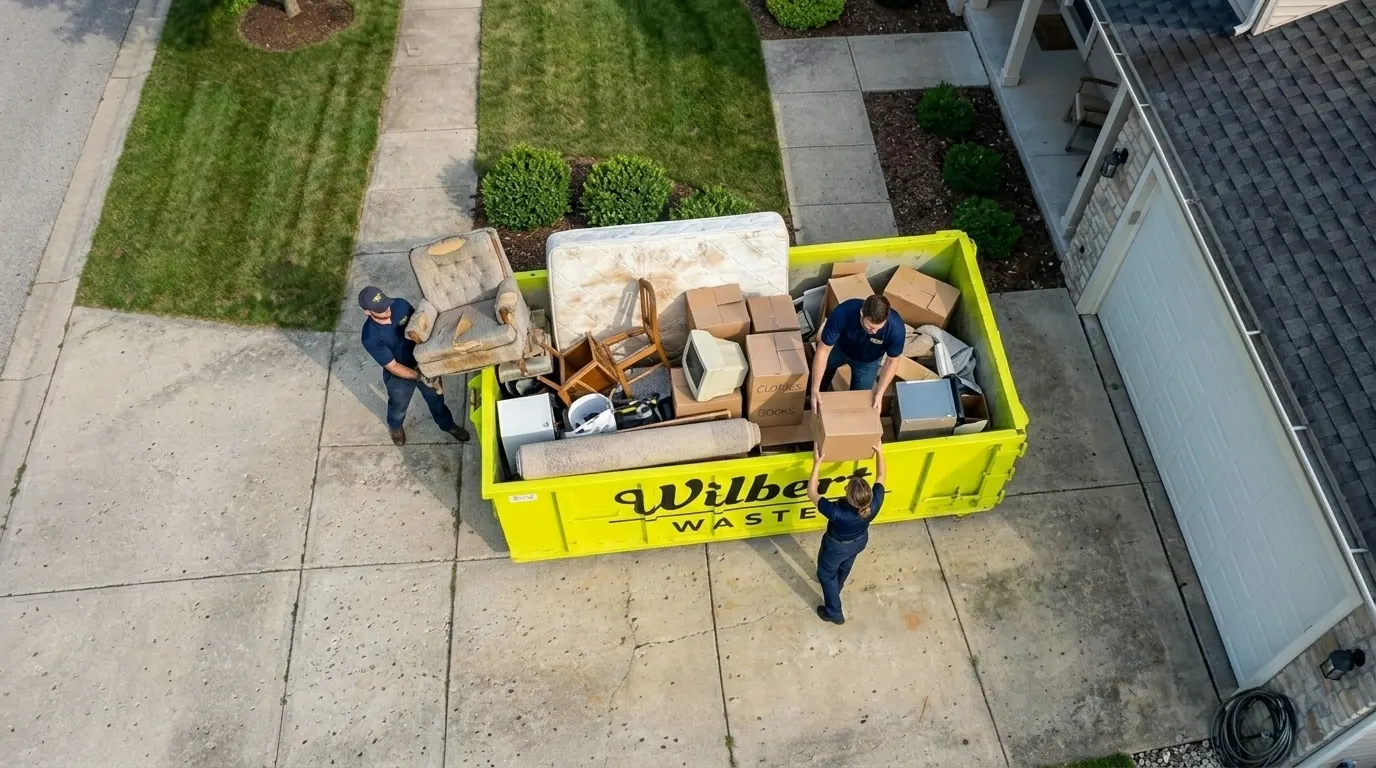
Break down furniture, flatten cardboard, cut lumber into manageable lengths, and knock apart cabinet frames before loading. You don't have to be obsessive about it — just don't throw whole intact items in if they'll leave large air gaps.
- Drywall and plaster: break into flat sections rather than throwing in whole sheets at odd angles
- Cardboard: flatten every box before it goes in
- Lumber and trim: cut to 4–6 ft lengths so they lay flat
- Furniture: remove legs, drawers, and doors; break down frames
- Brush and branches: cut to manageable lengths; don't throw in whole bushy limbs
Separate heavy debris from light debris
If your project involves both dense material (concrete, brick, tile, dirt, plaster) and light material (drywall, wood, household junk), keep them as separate as possible within the load — or better, use a dedicated container for the heavy material.
Mixing concrete with light debris creates a combined load that's hard to predict by weight. You might look at a half-full container and think you're fine, but if the bottom half is concrete, you may already be over weight. Dense material on the bottom with light material on top keeps the load readable.
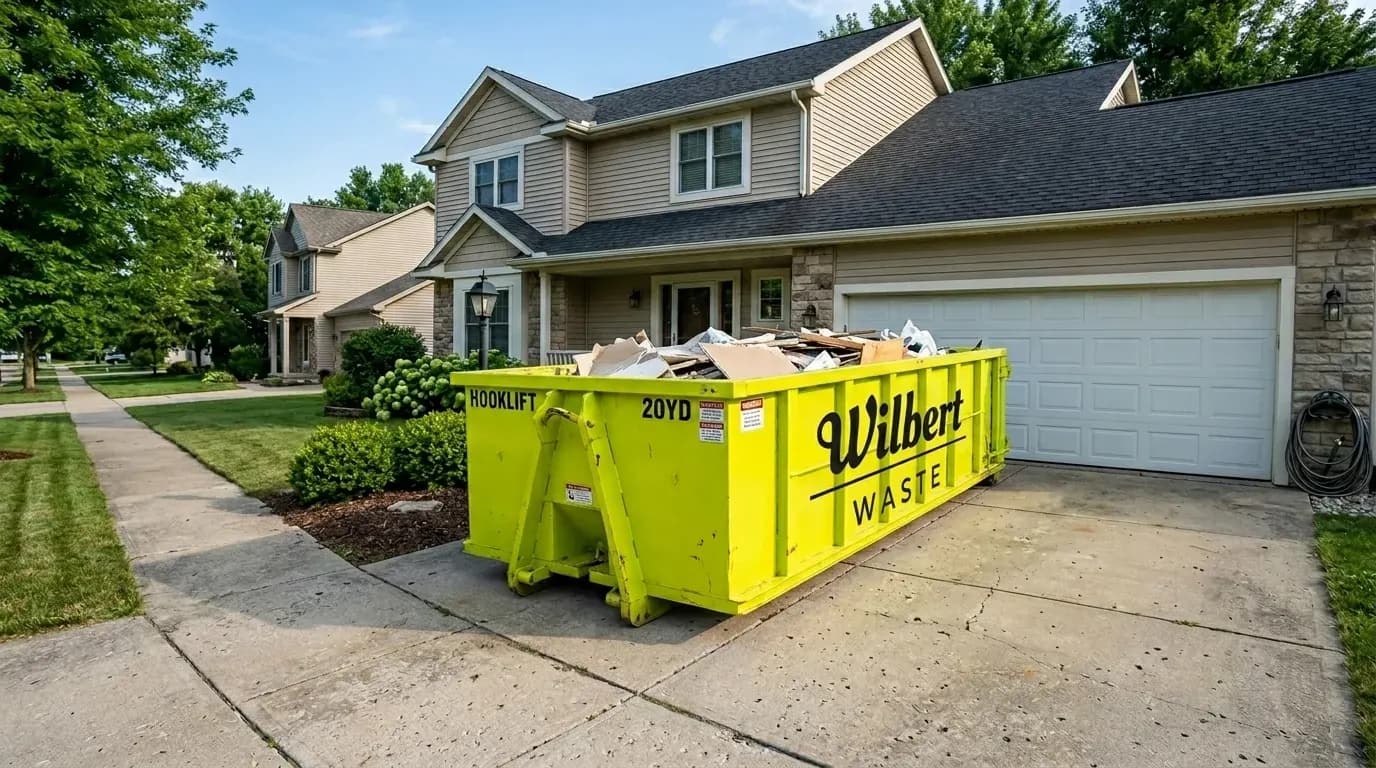
Don't fill above the top rail
The top rail of the container is the legal fill line. Anything above it is illegal to transport on Pennsylvania roads and we can't haul it. This isn't a preference — it's a transport safety and legal compliance issue.
If you're close to the rail and still have material to go in, call us. We can swap the container or schedule an additional haul. Trying to pile it higher wastes your time and ours.
Do a quick check before pickup
Before you call for pickup, do a 60-second walk around the container. Pull out any obviously prohibited items that may have ended up in the load — appliances with refrigerant, propane tanks, tires, TVs and electronics. A refused load at the landfill means a round-trip charge back to you.
Also check that nothing is sticking out over the rail or hanging off the sides. If weight distribution looks uneven (all heavy material on one side), redistribute if you can.
Related on this site
Jump straight to the pages that match this guide:
Local service links
Planning this project in the Pittsburgh area? Check local details and availability in Pittsburgh, Monroeville, and Greensburg. If your dates are firm, you can go straight to online booking.
Frequently asked questions
What happens if my dumpster is too heavy?
Weight overages beyond the included tonnage are billed at the published per-ton rate, itemized on your receipt after pickup. We weigh at the landfill scale, so you only pay for actual overage. If you're worried about weight, call us before pickup and we can discuss the load.
Can I fill the dumpster all the way to the top?
You can fill to the top rail — that's the legal maximum fill line. Above the rail is not legal to transport. If you've hit the rail and have more material, call us to schedule a swap or a second haul.
Can I load a dumpster myself or do I need a crew?
You can absolutely load it yourself. Most residential rentals are self-loaded by the homeowner over the course of the 7-day period. Just follow the basic principles: heavy on bottom, break down bulky items, stay below the top rail.
What if I finish early and want a pickup sooner than scheduled?
Call or email us and we'll schedule an early pickup. You're not locked into the full 7-day period — if you're done on day three, we'll come get it when it works for both of us.
Ready to book a dumpster?
Transparent pricing, fast local delivery, and online checkout in about 90 seconds.