Overview
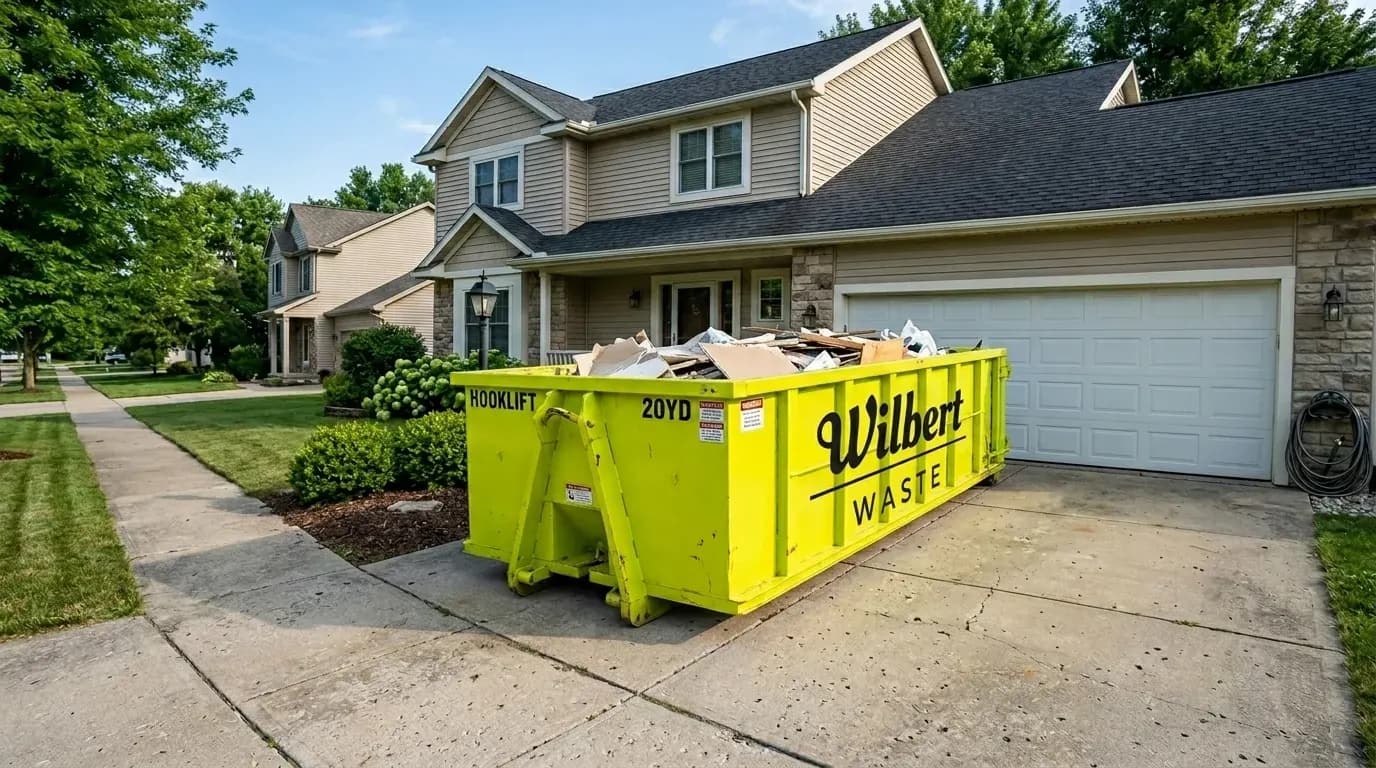
Concrete, brick, block, and fill dirt are a different category of disposal than standard renovation debris. The issue isn't volume — it's density. These materials are heavy enough to hit the legal transport weight limit long before a container looks anywhere near full. In a city full of brick houses, stone retaining walls, and old concrete steps, that comes up a lot.
Understanding the weight math up front is the difference between a predictable haul and a bill that comes as a surprise.
Why concrete needs its own container
Standard reinforced concrete weighs about 150 lbs per cubic foot. A 10-yard roll-off has roughly 270 cubic feet of interior volume. If you filled it entirely with concrete, that would be over 40,000 lbs — well beyond any legal transport weight. In practice, you'll hit transport weight limits at somewhere around 20–30% fill on a dense concrete load.
This is why we recommend keeping concrete and heavy demolition debris in a dedicated load. Mixed loads — concrete on the bottom, drywall and lumber on top — create unpredictable weight and make it hard to know when you're approaching the limit.
The practical rule: if you have a significant amount of concrete, call us and tell us upfront. We'll set up the right container and give you a realistic picture of how many hauls to expect.
Weight math for common heavy materials
- Concrete: ~150 lbs/cu ft — a 10'×10'×4" patio slab weighs about 2,500 lbs (1.25 tons)
- Brick: ~120 lbs/cu ft — a full pallet of standard bricks is about 3,000 lbs
- Concrete block (CMU): ~85 lbs/block for standard 8"×8"×16"
- Clean fill dirt: ~100–110 lbs/cu ft — a cubic yard of dirt is about 2,700 lbs
- Asphalt: ~145 lbs/cu ft — similar to concrete in density
- Clean gravel/stone: ~100–105 lbs/cu ft
What happens at the landfill for heavy loads
The landfills and transfer stations we use around Pittsburgh accept clean concrete, brick, and masonry for disposal. Clean concrete (no rebar, no wood, no mixed debris) is often accepted at a lower rate than mixed construction and demolition debris, or routed to a crusher for recycling — keeping your heavy load clean can reduce your disposal cost.
All loads are weighed at the scale on entry. The tipping fee is assessed by the ton, with a minimum charge. We pass the actual scale weight through to you at our published per-ton overage rate, so you pay for what you actually dispose of.
Concrete with rebar
Reinforced concrete with rebar intact is accepted at the landfill but may not qualify for a lower clean-concrete rate. Some recycling facilities accept rebar-embedded concrete for crushing — the recycled aggregate is used in road base. If you have a significant volume of structural concrete, it may be worth asking about recycling options before disposal.
Separating heavy from light debris
If your project generates both heavy material (concrete, brick) and standard C&D debris (drywall, lumber, insulation), separate them. Use the 10-yard for the heavy load and a larger container for the lighter general debris.
Mixing saves one delivery fee but costs you in unpredictable weight and a less efficient load. Two focused loads are almost always cheaper and simpler than one mixed load that surprises you at the scale.
Related on this site
Jump straight to the pages that match this guide:
Local service links
Planning this project in the Pittsburgh area? Check local details and availability in Pittsburgh, Monroeville, and Greensburg. If your dates are firm, you can go straight to online booking.
Frequently asked questions
Can I put concrete in a regular dumpster?
Yes, but it should be a dedicated concrete load. Mixing concrete with lighter debris makes the weight unpredictable and less efficient. We recommend a 10-yard container for concrete loads — the low walls make loading easy and the smaller volume keeps you from inadvertently going over transport weight limits.
How much concrete can fit in a 10-yard dumpster?
Not as much as you might expect. Concrete is about 150 lbs/cu ft. A 10'×10'×4" patio slab is roughly 1.25 tons, so a couple of average patio slabs will use up the tonnage included with a 10-yard. Larger amounts mean weight overages at the published per-ton rate — budget for that upfront.
Is clean concrete cheaper to dispose of around Pittsburgh?
Often, yes. Clean concrete, brick, and masonry without rebar or mixed debris is typically accepted at a lower tipping rate than mixed C&D debris, or diverted to a crusher. Keeping your heavy load clean — no wood, no drywall, no household junk — can reduce your disposal cost.
Can I put dirt in a dumpster?
Clean fill dirt is accepted, but the same weight rules apply — dirt weighs about 2,700 lbs per cubic yard. Even a modest amount of dirt adds up fast. Treat it like concrete: dedicated load, small container, expect to pay weight overages on larger quantities.
Do you have a container specifically for heavy debris?
Our 10-yard is the right container for most heavy-debris loads. Its low side walls make loading easy and the smaller volume keeps weight manageable. For large commercial concrete jobs, call us to discuss scheduling and multi-haul options.
Ready to book a dumpster?
Transparent pricing, fast local delivery, and online checkout in about 90 seconds.