Overview
Walk through a Pittsburgh farmers market on a Saturday morning — in Squirrel Hill, Bloomfield, East Liberty, the Northside, or down in the Strip District — and you see the good part: tables of sweet corn and apples, fresh flowers, pierogies, and local honey. What you don't see is the back-of-house reality — the mountain of cardboard crates, the packaging, and the unsold or bruised produce that has to go somewhere when the tents come down.
Behind every clean market is a waste plan, and a roll-off dumpster is often quietly at the center of it.
The waste a market generates
The volume surprises people. A busy market runs on cardboard — every vendor arrives with produce boxes, crates, and flats that get emptied and flattened over the morning.
Add plastic clamshells and packaging, produce trimmings and culls, floral scraps, and the general debris of setup and breakdown, and a single market day produces far more than a few curbside cans can hold.
The vendor cleanup crunch
The pressure comes at the end. Dozens of vendors break down within the same half-hour window, all needing to offload boxes and trash at once. If the only option is a handful of small bins, they fill instantly and the overflow ends up stacked on the ground — a bad look for the market and a headache for whoever's cleaning up.
A central solution takes that pressure off every vendor.
Where a roll-off fits for organizers
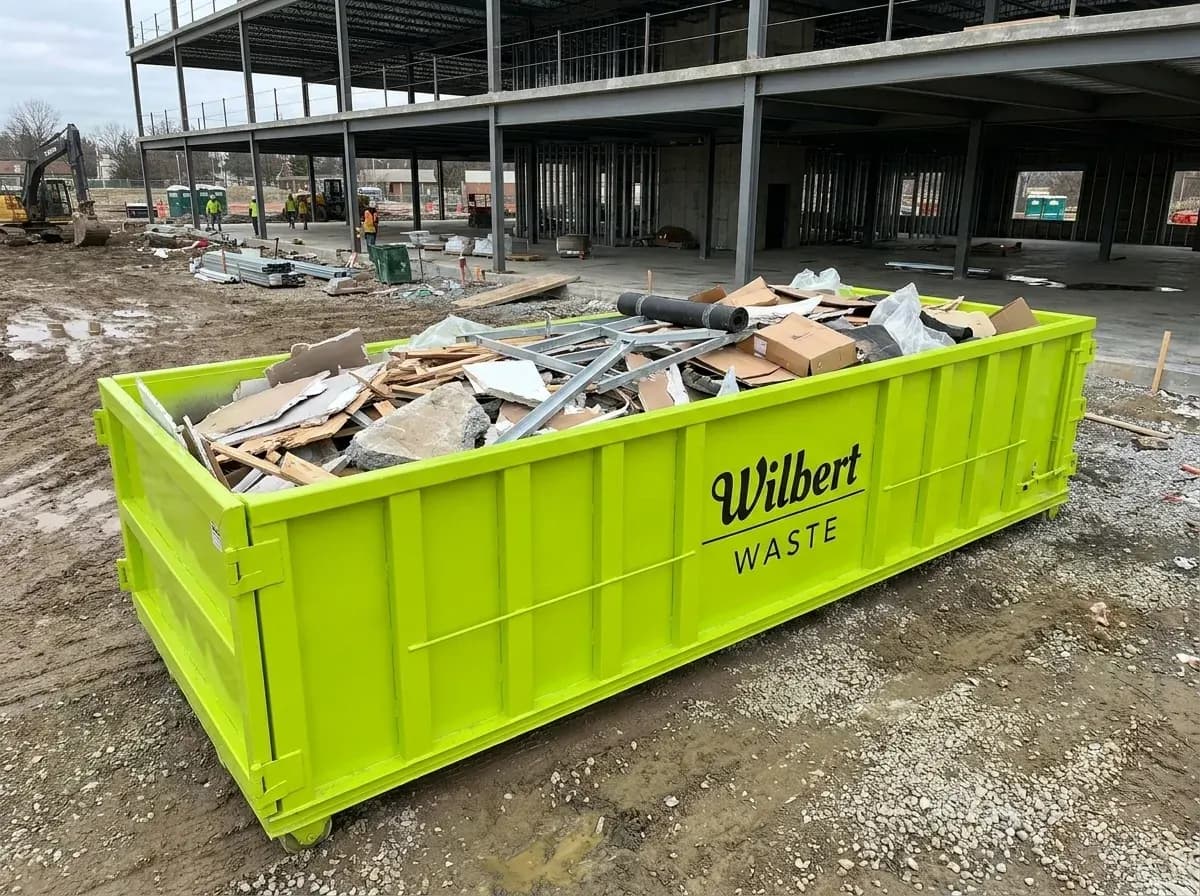
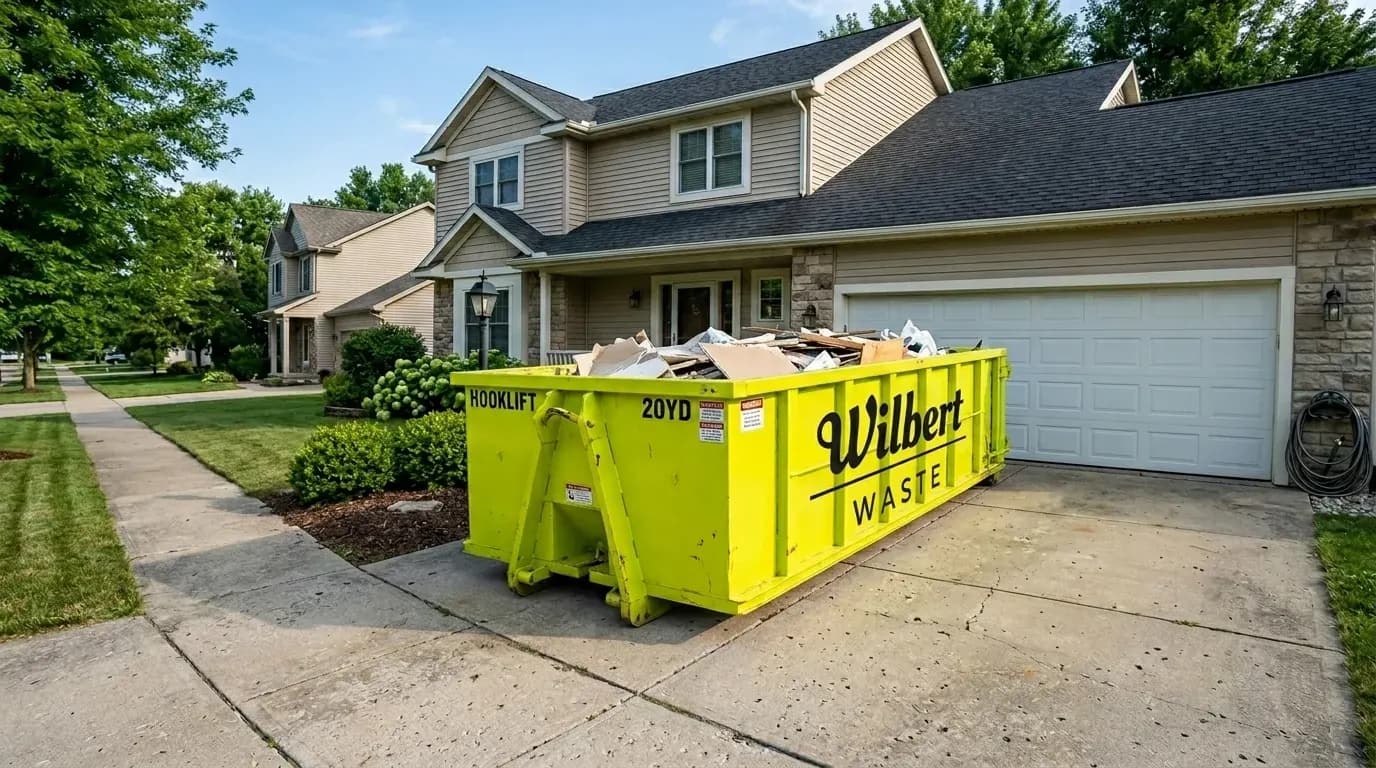
This is where a shared roll-off earns its place. Rather than each vendor hauling their own waste home, market organizers can stage one container for the whole market to handle cardboard and breakdown debris. In a city park or on a closed street, that usually means coordinating with the city on placement and permits — we can help with that.
For weekly or seasonal markets, a standing container on a regular pickup schedule makes cleanup predictable and keeps the site presentable week after week.
Compost and recycle first
A dumpster shouldn't be the first stop, though — it should be the last. Cardboard is clean, high-volume, and easily recycled. Produce trimmings and spoiled stock are ideal for composting. And unsold food that's still good can often be donated to local food-rescue partners.
Set those streams up and the roll-off catches only what can't be diverted, which keeps real volume out of the landfill.
Keeping markets clean — and local
A market is a community gathering, and part of running one well is leaving the site as clean as you found it. A reliable local hauler — one that shows up on schedule and helps you plan the recycling and compost streams, not just the trash — makes that easy.
It's exactly the kind of behind-the-scenes support we think local businesses should give the community events that make Pittsburgh's neighborhoods what they are.
Local service links
Planning this project in the Pittsburgh area? Check local details and availability in Pittsburgh, Monroeville, and Greensburg. If your dates are firm, you can go straight to online booking.
Frequently asked questions
Do farmers markets need a dumpster?
Larger or weekly markets usually benefit from a shared roll-off for cardboard and breakdown waste, alongside composting and recycling. Small one-off markets may get by with bins, but the cardboard volume adds up fast.
What happens to unsold produce at a market?
Ideally it's donated to a food-rescue partner if it's still good, or composted if it's not. A dumpster should only handle what can't be donated or composted.
Ready to book a dumpster?
Transparent pricing, fast local delivery, and online checkout in about 90 seconds.