Overview
The South Carolina Lowcountry sits squarely in Atlantic hurricane territory. From June through November, coastal counties face storm threats that can generate enormous amounts of debris fast — downed trees, damaged roofing, waterlogged insulation, and damaged structures all in the same cleanup.
Storm debris hauling has a few specific wrinkles that standard cleanouts don't. Knowing them before you call saves time when you're already dealing with a lot.
Wet debris is heavier than it looks
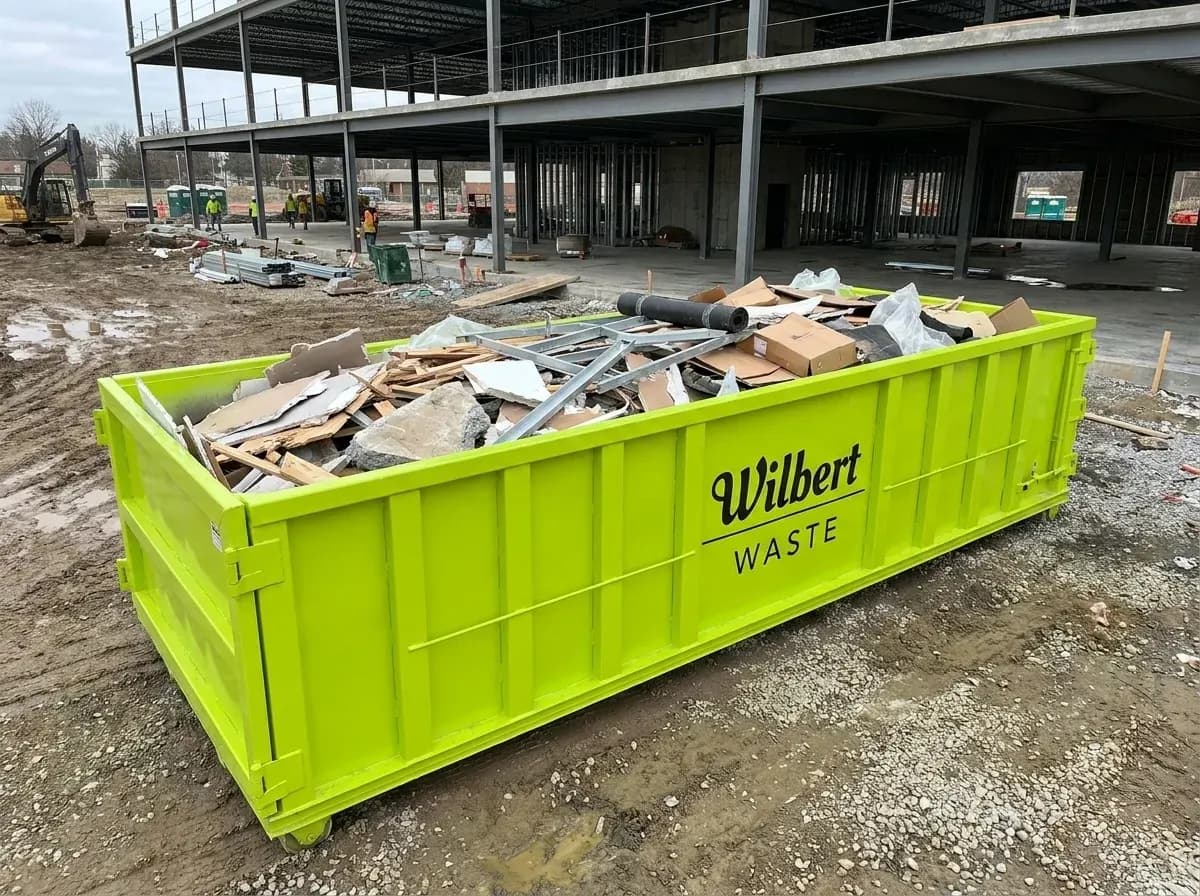
After a storm, virtually everything in your yard has absorbed water. Saturated soil, waterlogged lumber, wet insulation, and soaked drywall all weigh significantly more than the same materials dry. A pile that looks like a 2-ton load might be a 4-ton load once it's in the container.
Plan for overage on storm cleanups. It's not a failure to go over the included tonnage — it's just physics. The $85/ton overage is predictable and far better than undercounting and making two hauls.
Ground conditions and placement
Storm-saturated ground is soft. A roll-off container full of debris can sink into a wet lawn or unpaved surface. We place boards under the wheels as standard practice, but if your driveway is compromised or your access route is blocked by debris, let us know when you book so we can problem-solve placement in advance.
If your driveway has standing water or the access is blocked by fallen trees, we may need to stage the container on the nearest accessible hard surface and coordinate with you on a safe loading path.
What can and can't go in a storm debris container
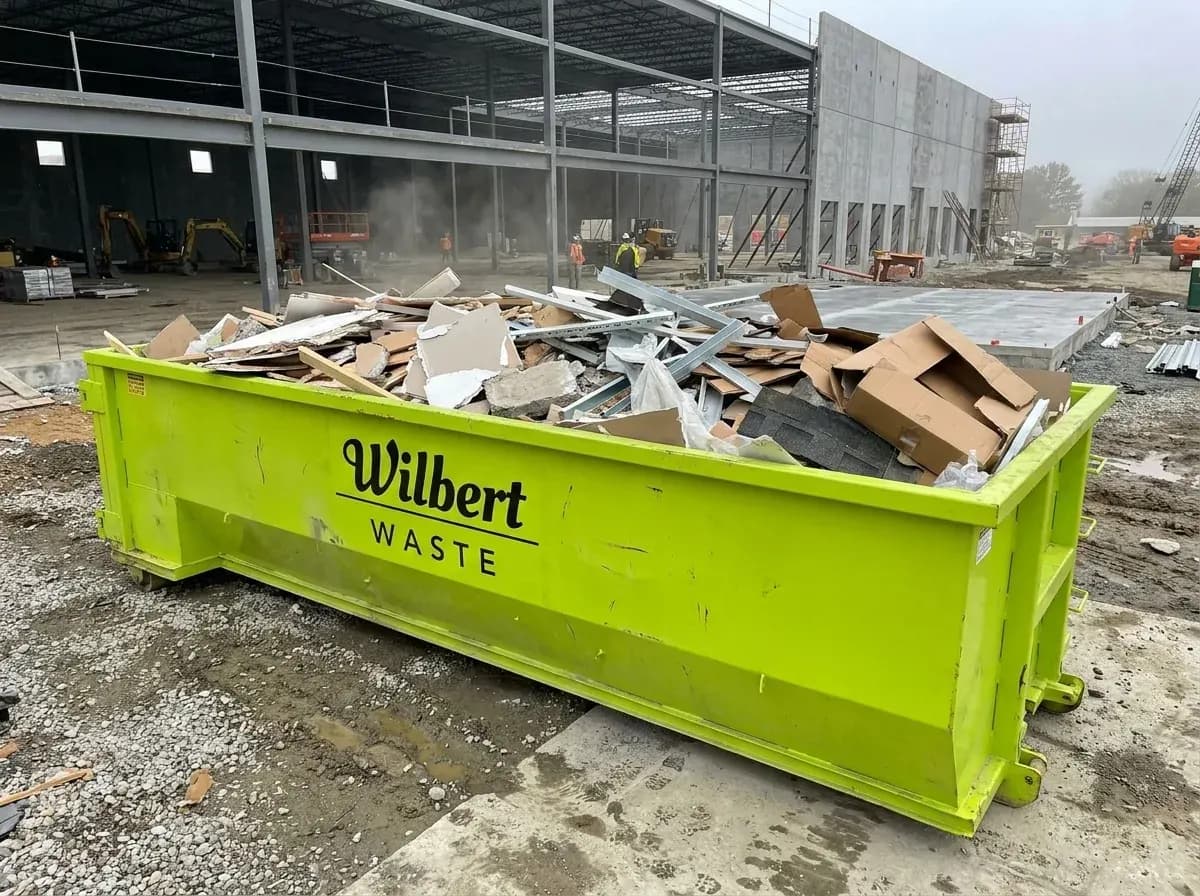
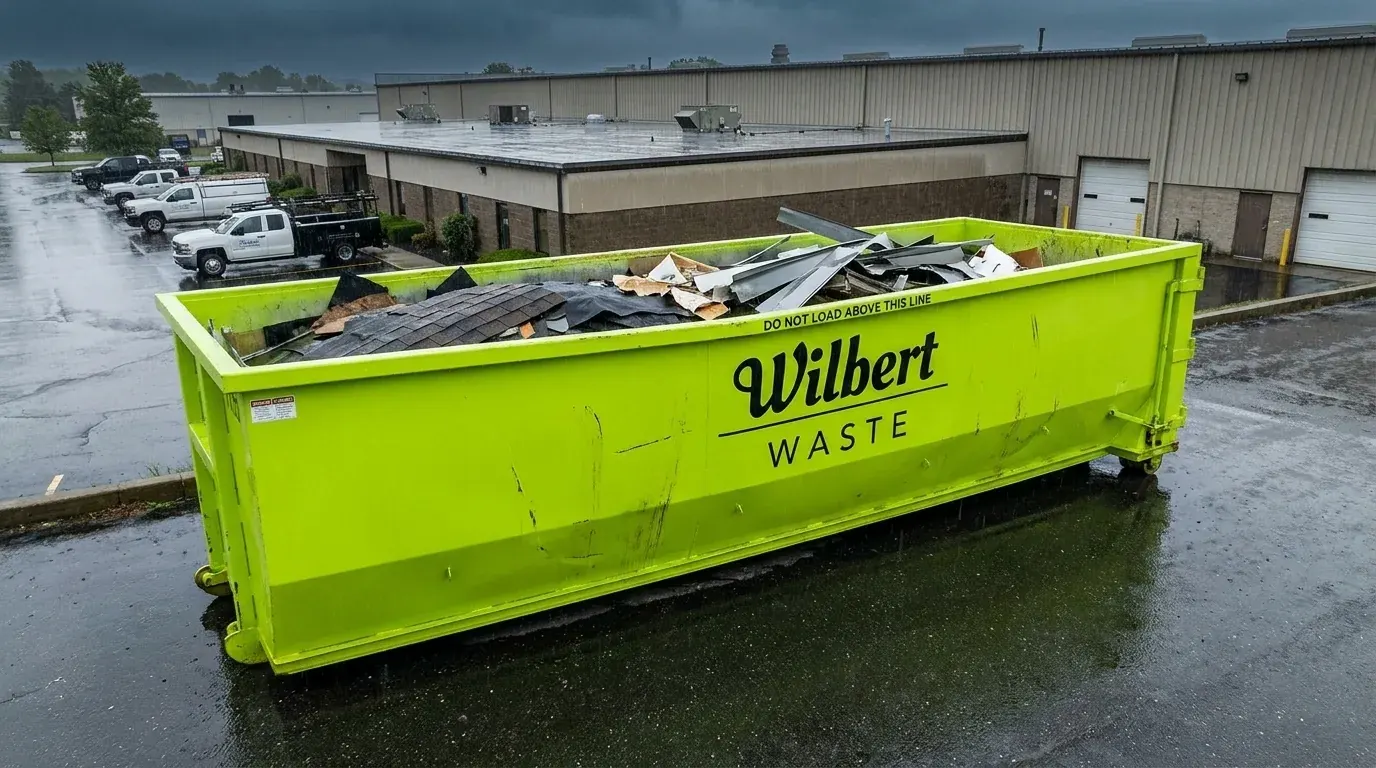
Most storm debris is fine: fallen tree branches and limbs, brush and yard waste, damaged lumber and framing, shingles and roofing material, siding, damaged furniture, and general debris.
A few storm-specific items need separate handling:
- Flooded appliances with refrigerant (refrigerators, AC units) — freon must be removed before disposal, same rule as always
- Asbestos-containing materials — older SC homes (pre-1980) may have asbestos in siding, insulation, or floor tiles; storm damage can expose it. Have a licensed inspector evaluate before disposing
- Propane tanks — common backyard items that don't belong in a dumpster under any conditions
- Liquid waste — flooded fuel containers, oil, chemicals
- Electronics damaged in the flood — still covered by SC's e-waste rules
Book early after a major storm
Container availability drops fast after a significant weather event. If your neighborhood took a hit, so did every other neighborhood in the county, and everyone needs a container at the same time. Call or book online as soon as you have power and a clear sense of what you're dealing with — don't wait until you've already started hauling debris to the curb.
We prioritize the service area we know — Berkeley, Charleston, and Dorchester counties. If you're in our area and hit hard, call us directly and we'll do our best to get a container to you quickly.
Documenting for insurance
Before you start loading, photograph everything. Your homeowner's insurance claim will be stronger with photo documentation of the debris before removal. Get time-stamped photos of each area. Keep the container ticket and weight receipts — your insurance adjuster may ask for disposal costs as part of the claim.
Related on this site
Jump straight to the pages that match this guide:
Local service links
Planning this project in the Charleston metro? Check local pricing and availability in Summerville, Moncks Corner, and Goose Creek. If your dates are firm, you can go straight to online booking.
Frequently asked questions
Can I put tree branches and yard debris in a roll-off dumpster?
Yes. Fallen limbs, branches, brush, and yard waste are accepted. Very large whole tree sections may need to be cut down to manageable lengths to fit and distribute weight safely. Green wood and brush is accepted at the Berkeley County Landfill.
What if my driveway is flooded or blocked?
Let us know when you book. We can often stage the container on the nearest accessible hard surface — a neighbor's cleared driveway, the street edge — and work with you on a loading plan. We'll problem-solve rather than turn around.
Will my homeowner's insurance cover dumpster rental for storm cleanup?
Many homeowner's policies cover debris removal as part of storm damage claims. Keep your rental receipt and the weight ticket from the landfill — your adjuster may need itemized disposal costs. Check your policy's debris removal coverage limit.
How quickly can you deliver a dumpster after a storm?
We do our best. Post-storm demand is high and we work through the area systematically. Book online or call as early as possible. We'll give you a realistic delivery window and keep you updated.
Ready to book a dumpster?
Transparent pricing, fast local delivery, and online checkout in about 90 seconds.