Overview
Estate cleanouts happen when people are already carrying a lot. The last thing a family needs in the middle of that is logistics that make the process harder. This guide is meant to make the practical side of a cleanout as straightforward as possible.
The short version: sort before you dispose, set aside what has value or needs special handling, and call us when you're ready for a container. We've done enough of these to know that patience matters and that the timeline is yours to set.
Sort before you dispose
The single most expensive mistake in an estate cleanout is disposing of things that have real value — either financial or to other family members. Before a single bag goes in the dumpster, do a sort.
Walk every room and identify three categories: keep, donate/sell, and dispose. Furniture in good condition, tools, collectibles, jewelry, documents, and electronics often have value that a dumpster doesn't care about.
- Furniture in good condition: Habitat for Humanity ReStore does free pickup of qualifying furniture and appliances in the Charleston area
- Collectibles and valuables: consider an estate sale company or auctioneer before disposing — they work on commission and cost nothing upfront
- Tools and equipment: often sellable quickly on Facebook Marketplace or to local contractors
- Documents and financial records: shred sensitive documents; do not throw them in an open dumpster
- Medications: take to a pharmacy take-back program or DEA-authorized collection site — do not flush or trash
- Firearms: must be transferred through a licensed dealer (FFL) or law enforcement — cannot be disposed of in a dumpster
What needs special handling
Several items commonly found in older homes require care beyond the dumpster.
- Appliances with refrigerant (refrigerators, freezers, window AC units): freon must be professionally removed before disposal — see our prohibited items guide
- Old paint cans: liquid paint is hazardous waste; dried-out paint may be accepted depending on type — take liquid paint to a county HHW event
- Propane tanks: must go to an exchange or HHW program, not the dumpster
- Electronics and batteries: covered by SC's e-waste rules — take to a collection event or retailer drop-off
- Asbestos: present in some pre-1980 South Carolina homes (floor tiles, insulation, siding) — do not disturb suspected asbestos; have it tested by a licensed inspector before the cleanout begins
Coordinate with the estate process
If the estate is going through probate, the executor has authority over property disposal. If probate is open, confirm with the executor or the estate attorney before disposing of anything — some jurisdictions require court approval for asset disposal above certain values.
This isn't meant to be a legal roadblock — it's just worth a quick conversation with the attorney handling the estate before you start loading. In most simple estates, the executor can authorize the cleanout without court involvement.
Sizing the container
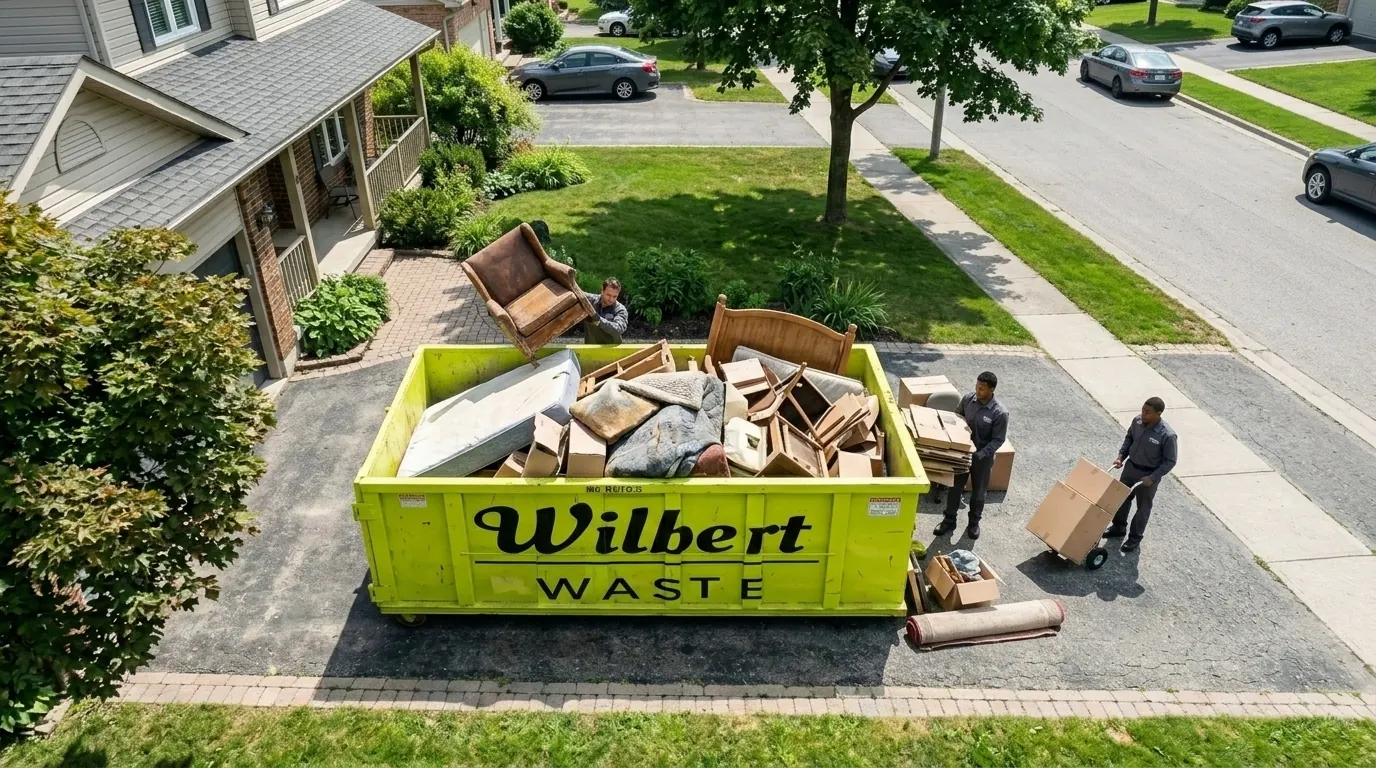
Most single-family estate cleanouts require a 20-yard container. Large homes, homes with significant accumulated items, or homes that haven't been cleared in many years may need a 30-yard or multiple hauls with a 20-yard.
When in doubt, go larger. An extra day on a bigger container is almost always cheaper than a second delivery fee on a smaller one. If you're not sure, describe the property to us when you book and we'll give you a straight recommendation.
Note: we're not open for business yet — we're targeting a Fall 2027 launch. Join our waitlist and we'll let you know the moment booking opens.
The timeline is yours
Estate cleanouts don't follow a project schedule. Families need time to go through things, and that's fine. We offer 3 and 7-day rental windows, and we can extend by the day if you need more time. Just call us before the rental ends and we'll work it out.
If you need to pause and come back — say, you need a week between sorting sessions — we can schedule pickup and a new delivery when you're ready.
Related on this site
Jump straight to the pages that match this guide:
Local service links
Planning this project in the Charleston metro? Check local pricing and availability in Summerville, Moncks Corner, and Goose Creek. If your dates are firm, you can go straight to online booking.
Frequently asked questions
What size dumpster do I need for an estate cleanout?
Most single-family estate cleanouts work well with a 20-yard container. Larger homes or estates with decades of accumulated items may need a 30-yard or multiple hauls. Describe the property to us when you book and we'll give you an honest recommendation.
Can I put old furniture in a dumpster?
Most furniture is accepted — sofas, beds, dressers, tables. The exception is items containing regulated materials (old cushions with certain flame retardants may be flagged at some facilities). When in doubt, ask us before it goes in. Furniture in good condition is worth donating before it goes to disposal.
Who picks up donated furniture in the Lowcountry?
Habitat for Humanity ReStore offers free pickup of qualifying furniture and appliances in the Charleston metro area. Goodwill also accepts furniture drop-offs. Local churches and community organizations sometimes take specific items — worth a few calls before the cleanout starts.
What do I do with old medications found in the estate?
Take them to a pharmacy medication take-back program or a DEA-authorized collection site. Most major pharmacies (CVS, Walgreens, Walmart) have take-back kiosks. Do not flush or dispose of medications in the trash or dumpster.
How do I handle firearms found in an estate?
Firearms must be transferred through a licensed dealer (FFL) or turned over to law enforcement. They cannot be disposed of in a dumpster or trash under any circumstances. Contact a local gun shop about handling estate firearms — they can facilitate a legal transfer or sale.
Ready to book a dumpster?
Transparent pricing, fast local delivery, and online checkout in about 90 seconds.